Plex Industrial IoT
A new 0→1 platform for connected factory environments, built from acquired IP and designed to exchange data with Plex while operating independently.
The Challenge
Plex Systems, known for its cloud-based ERP solutions for manufacturing, acquired an industrial IoT asset-tracking product with the goal of rebuilding it in-house. The vision was to transform this acquired IP into a brand-new, modern platform that integrated with Plex’s ERP yet operated independently to support connected factory environments.
Industrial manufacturers faced significant challenges in managing real-time data from diverse machines and systems. Pain points included fragmented visibility into equipment health, downtime tracking, performance monitoring, and the sheer complexity of handling data at vastly different scales. The market demanded tools that could simplify this data, provide actionable insights, and support varied operational priorities across industries, facility sizes, and equipment types.
The Approach
- Problem Framing. Designing an Industrial IoT solution required balancing multiple layers of complexity. The system had to scale from monitoring a single asset to supporting entire facilities with thousands of devices, each producing high-volume data streams. Data complexity amplified the challenge: identifiers like OPC tags were often managed by third-party systems with little consistency, making mapping and visualization unreliable. Customers also required high levels of customizability, since different industries prioritized different metrics, dashboards, and analytics. Finally, even within the same manufacturing roles, workflows varied significantly across companies, demanding flexible and adaptable design solutions.
- Research and Discovery. To address these risks, we invested heavily in discovery. Onsite interviews and production-floor observations allowed me to build subject-matter expertise in how operations function at a detailed level, understanding how chemicals are stored, how food is frozen in large freezer systems, and which components inside machinery present the greatest maintenance challenges. I studied how these systems were monitored with sensors and what “real” data looks like in context, rather than relying on placeholder values. Incorporating authentic data representations into prototypes made them more immersive, helping stakeholders empathize with personas and workflows while grounding design conversations in realistic scenarios.
- Validation Before Investment. We combined this with structured focus groups and concept reviews to validate product directions before engineering investment, supplemented by competitive analysis to benchmark functionality. Iterative design cycles and milestone feedback gave us opportunities to course-correct quickly. A pivotal moment came when a concept initially believed to be critical revealed major usability and adoption risks during testing. Because this surfaced early, we avoided costly engineering investment, pivoted rapidly, and reinforced customer trust in the process.
- Design Execution. With clear insights, the design process moved from strategy into detailed execution. Personas and journey maps were created to reflect the diversity of operational contexts. Low-fidelity wireframes allowed quick exploration of workflows, while high-fidelity dashboards and prototypes emphasized layered visualizations where users could either monitor at a high level or drill into details as needed.
- Physical-to-Digital Structure. I designed components that created resonance between the data and the physical environments being monitored. Related data was structured in ways that reflected how assets existed in real space, strengthening the connection between workflows and system feedback. Interaction patterns gently nudged users through ordered steps for optimal workflows, but always allowed them to pause, depart, and rejoin guided paths as needed. This balance of structured guidance with flexible autonomy reflected real manufacturing demands where priorities shift constantly.
Creating a System of Organized Data
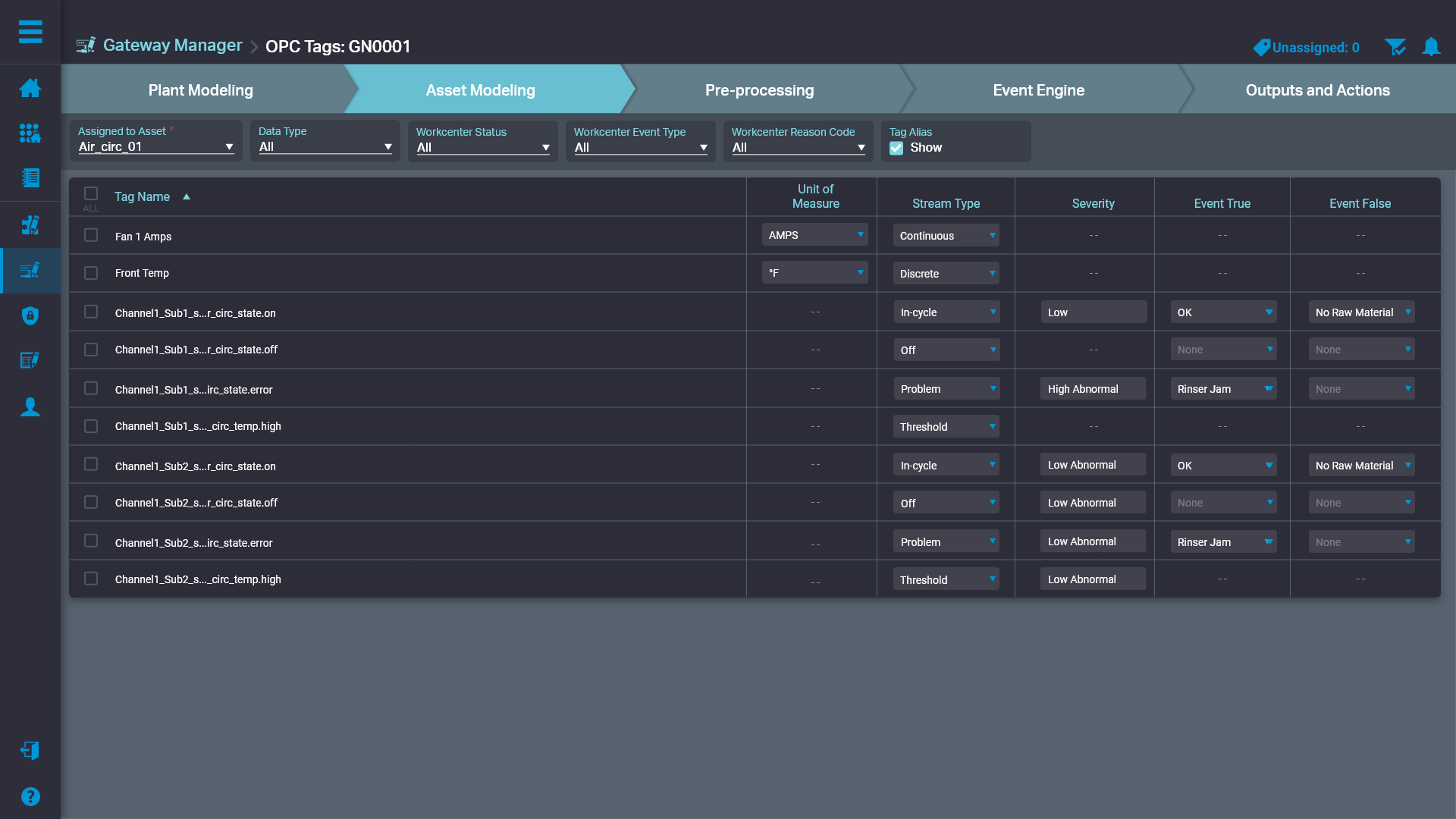
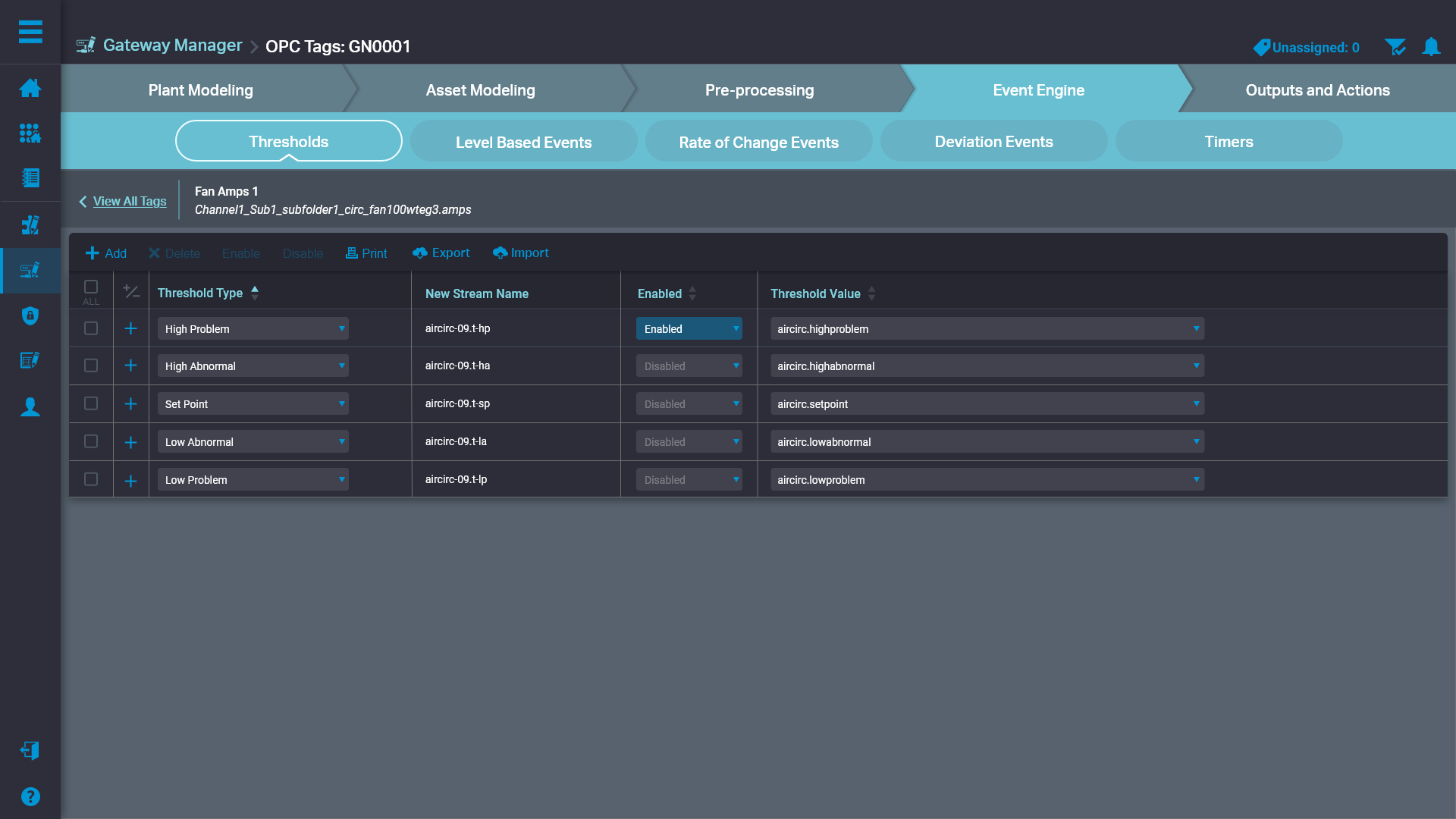
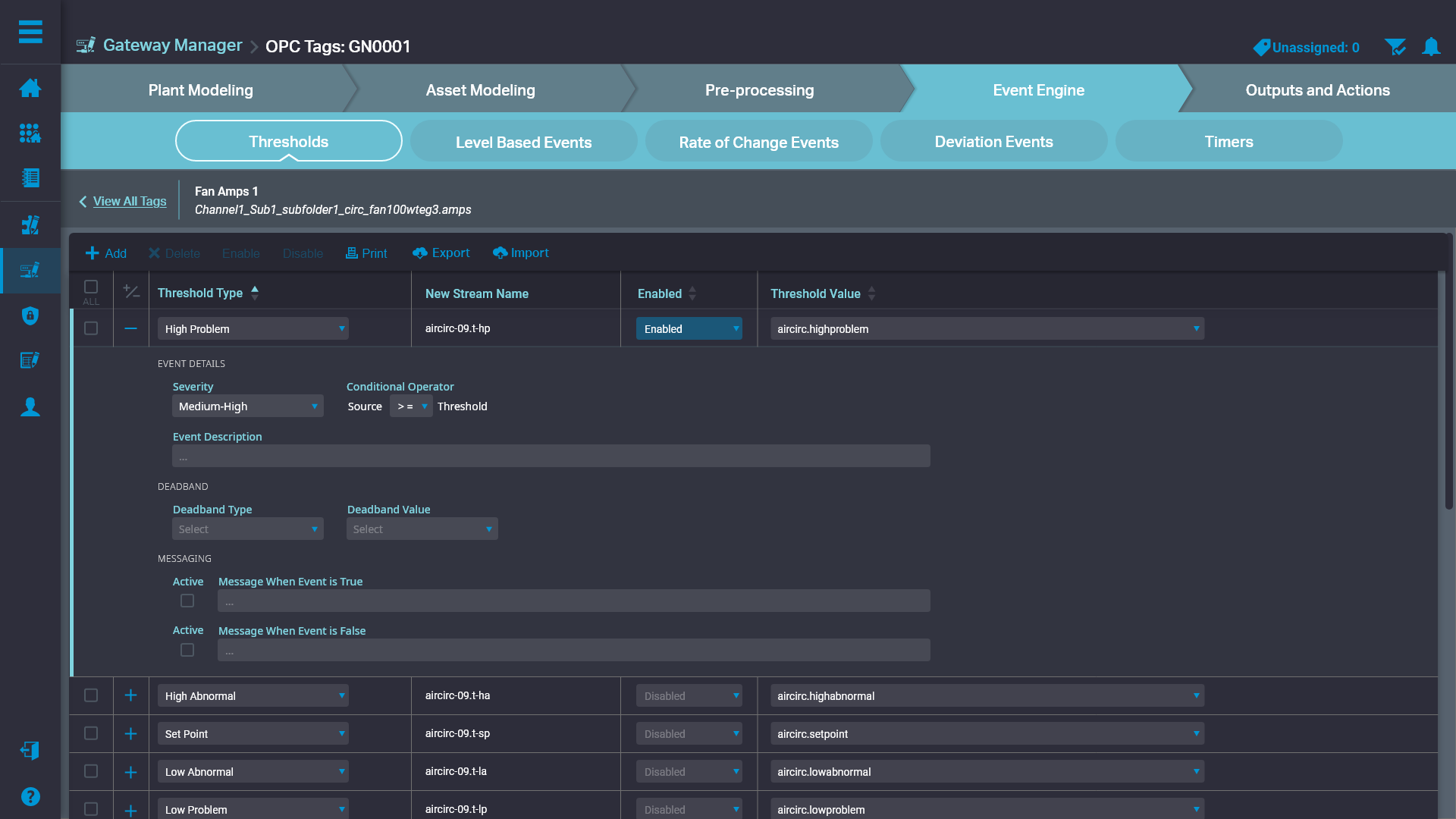
The Industrial IoT platform utilized sensor data coming from a variety of machines and systems, which often had inconsistent identifiers and formats. To address this, I designed a data normalization layer that standardized incoming data streams, allowing for reliable mapping and visualization. At each level, users were guided through segmented workflows that allowed data to be managed granularly and in bulk management approaches, creating foundational layers that would lend themselves to future predictive analytics and machine learning applications.
Asset Monitoring at Scale
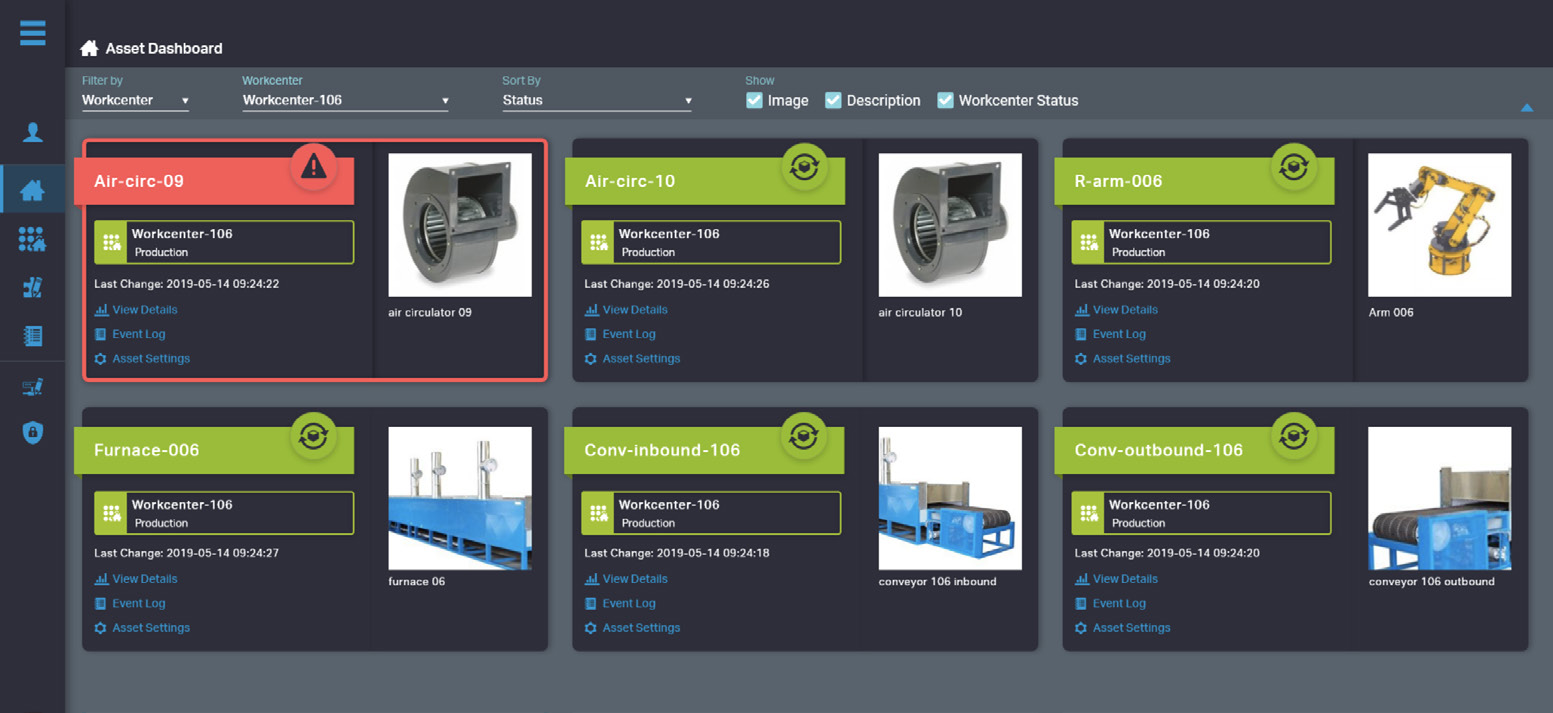
The experience supported real-time monitoring across individual assets, production systems, and whole facilities while keeping high-volume, detail-heavy data manageable and actionable. To understand the complexity of this project, consider the needs and perspectives of the most common user personas: a plant manager, a maintenance technician, and a production operator. Each has different priorities, workflows, and levels of technical expertise, yet all must interact with the same system to ensure smooth operations. A plant manager requires a quick understanding of where attention is needed and ongoing monitoring. Not just on a dashboard in their hands, but a quick glance from 20-30 feet away. An operator requires the ability to both see all system statuses, and make detailed specific notations on a minute level. This system turned massive amounts of data into a clear pathway for ongoing management and predictive machine analytics.
Performance, Downtime, and Equipment Health
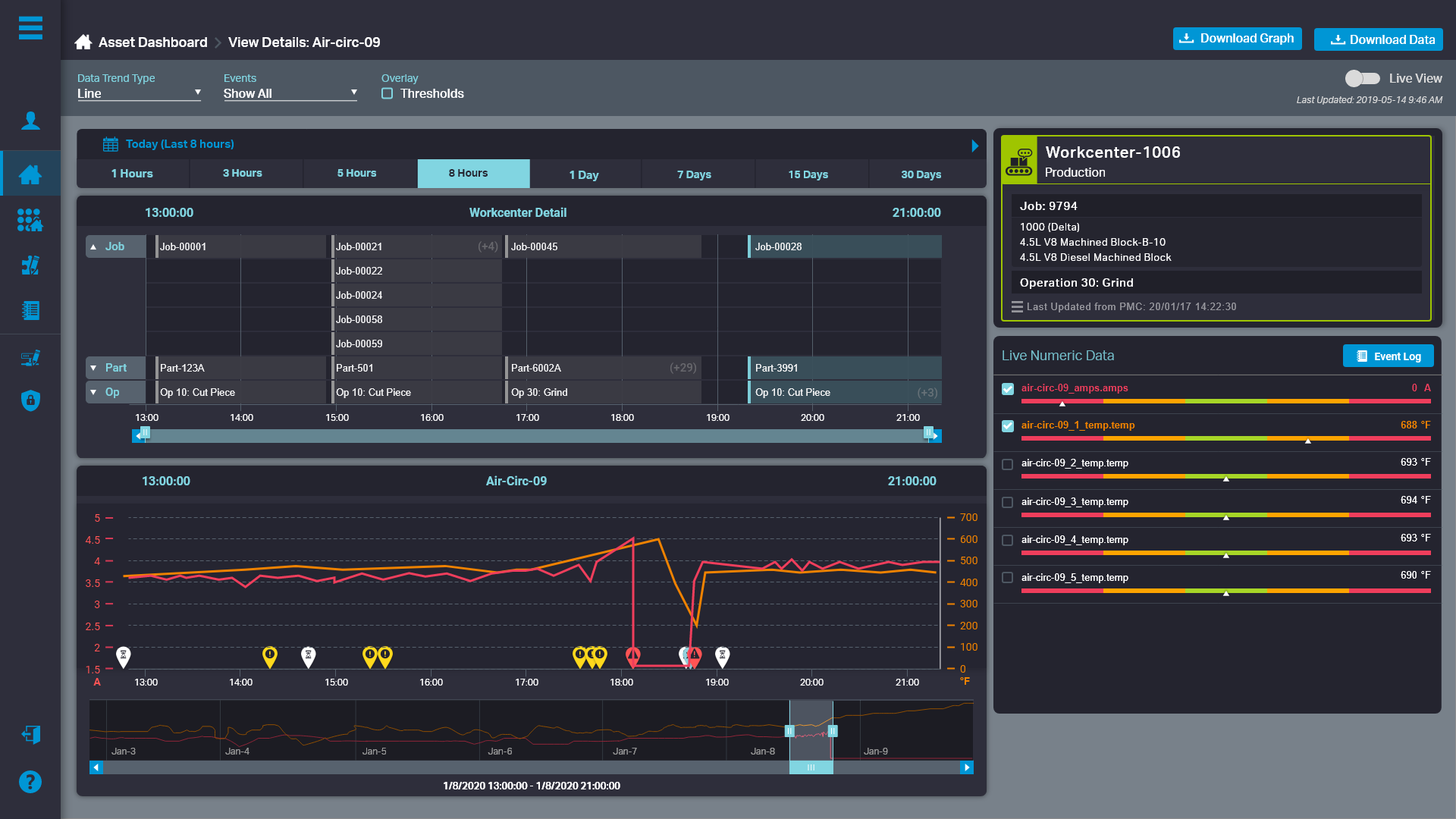
The final experience balanced automation with hands-on control, allowing plant teams to track performance, downtime, and equipment health in real time. The Time Series and Threshold display allowed users to see trends and patterns over time, while the Equipment Details view provided granular insights into individual machines. This dual approach enabled both high-level oversight and detailed analysis, empowering teams to make informed decisions quickly and effectively.
My Role
As Principal Product Designer, I led the end-to-end UX, UI, and research efforts for the Industrial IoT product. My responsibilities included:
- Product Vision. Defined the product vision and translated early-stage IP into a scalable, user-focused solution.
- Contextual Research. Conducted onsite interviews and observations at manufacturing facilities to capture real-world workflows and user needs.
- Workflow Design. Developed user flows, wireframes, and hi-fi designs for complex workflows and data visuals.
- Usability Testing. Led testing cycles and iterative design processes with milestone customer feedback sessions.
- Customer Presentation. Introduced the product at the annual customer conference, presenting in both large sessions and smaller breakout discussions.
- Cross-Regional Collaboration. Partnered with a Lead Product Manager in Bengaluru and coordinated with development teams distributed between in-house staff and a team in Belarus.
I also led the evolution of Plex’s design system to support these experiences, extending it from a light theme to a dark theme and later a complete rebrand. These changes modernized tones, aligned with corporate guidelines, and ensured that visual consistency supported both the density of data displays and the flexibility of customer-specific adaptations.
The Impact
The Industrial IoT solution matured into a platform that could flex between simple asset monitoring and large-scale facility operations without losing usability. By grounding prototypes in real-world production data and workflows, we ensured that designs reflected authentic user needs rather than abstract placeholders. This made stakeholder reviews more meaningful and created stronger empathy across the product team.
Customer trust increased as early discovery efforts prevented costly missteps and demonstrated that their feedback shaped the product. The design system updates established a consistent, modern foundation that supported both dark and light themes, reinforcing accessibility and usability across data-dense dashboards.
Operationally, the balance between guided workflows and flexible autonomy reduced user error, supported faster onboarding, and gave teams confidence that they could complete tasks in a way that matched both their industry and their facility-specific demands. The structuring of data to mirror the physical environment improved how users navigated and interpreted information, aligning the product with the realities of complex manufacturing systems.
Less than one year after this launch, Plex Systems was acquired by Rockwell Automation, with the Industrial IoT solution positioned as a core differentiator in the company’s growth strategy.
Key Takeaways
- Embedding real data and authentic workflows into prototypes builds empathy and clarity during the design process, reduces risk, and increases adoption.
- Subject-matter expertise is critical; observing production environments at a granular level created insights that no abstract personas or placeholder data could capture.
- Balancing guided flows with flexible autonomy supports both efficiency and adaptability in high-variability industries.
- Structuring digital systems to reflect physical environments improves navigation, comprehension, and user confidence, driving onboarding and user self-discovery goals.
- A robust design system ensures that scalable, accessible, and modern interfaces can evolve alongside both customer needs and corporate brand shifts.