AI Form Builder
Leading product discovery in AI for a conversational tool built for regulated manufacturing workflows.
The Challenge
Building an AI-powered form creation tool for regulated manufacturing environments required addressing both technical and human factors. The system had to deliver accurate logic, dependency handling, and compliance support while remaining intuitive for users with varying levels of technical expertise.
The challenge was twofold:
- Product readiness. The AI Form Builder was an early-stage solution that needed validation of core workflows, terminology, and logic behaviors before moving toward broader release.
- Organizational preparedness. Customer Enablement teams would be responsible for supporting AI-assisted workflows, but had no existing playbook for teaching, troubleshooting, or scaling embedded AI.
Without a structured way to test usability, surface real behaviors, and build internal confidence, the product risked being misunderstood, underutilized, or creating support burdens. The Alpha Program was created to reduce these risks by turning research into both product improvements and organizational enablement.
The Approach
The Alpha Program was intentionally structured as more than a feature test. It was designed as a research-driven environment where internal enablement and product strategy could evolve in parallel. My role spanned from upfront planning to daily execution, ensuring the program produced actionable insights while preparing the organization to support AI-driven workflows.
Contributions as Director of UX Research, Analytics, & Design:
- Program Structure. Designed the Alpha to balance two critical objectives: onboarding Customer Enablement teams while also generating structured feedback from internal testers. Defined participant waves aligned with feature maturity, sequenced timelines for progressive exposure, and created task scenarios that reflected real manufacturing contexts.
- Onboarding and Task Framing. Developed task-based workflows that mirrored realistic form-building scenarios such as layering logic dependencies, configuring compliance fields, and adapting forms for audits. Built internal guides and contextual knowledge materials for Customer Enablement so they could build fluency and confidence in parallel with product evolution.
- Unmoderated Video Testing. Implemented unmoderated video testing where participants narrated their actions while completing tasks, revealing natural behaviors and expectations. Captured insights into first-click intent, confusion points, workflow breakdowns, and terminology gaps.
- Thematic Synthesis. Organized findings into categories such as navigation flow, interaction patterns, and sentiment. Prioritized using authentic data scenarios instead of placeholder content to create immersion, build empathy with personas, and surface workflow challenges in realistic terms.
- Cross-Functional Alignment. Facilitated retrospectives with Product, Engineering, and Customer Enablement to prioritize improvements, clarify ownership, and embed a shared understanding of what trustworthy embedded AI should deliver.
- Enablement Integration. Positioned the Alpha as a live training platform. Customer Enablement teams tested support scripts, built knowledge repositories, and identified potential customer struggles. This ensured that while the product matured, internal teams were already prepared to support it effectively.
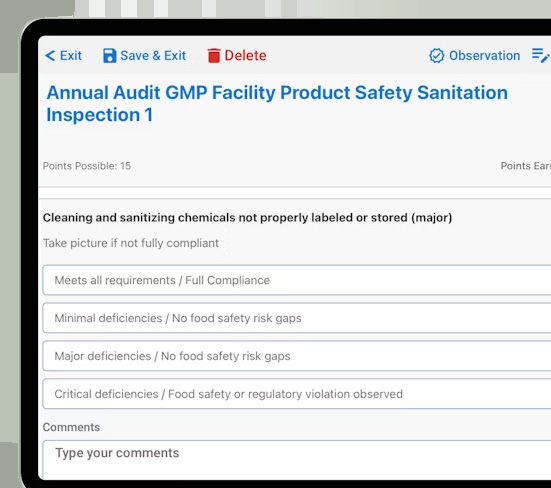
Testing Output on External Devices
The Alpha Program used realistic manufacturing scenarios to connect AI-assisted form creation with the environments where resulting audit and inspection workflows would ultimately be used.
Interactive Prototype
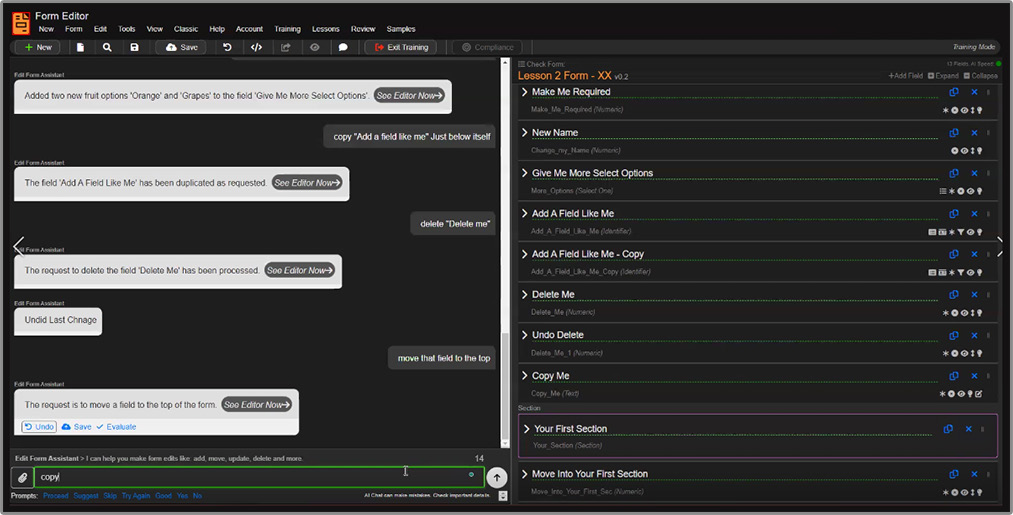
The AI tool was tested by utilizing a live prototype in a test environment. This allowed for real interaction with unmoderated users and quick improvements for continued testing.
The Impact
The Alpha Program uncovered more than 30 high-impact improvements across interface design, logic behavior, and onboarding support. By grounding tasks in realistic workflows and authentic data scenarios, the program revealed usability issues that would have remained hidden in abstract testing. Core changes included clearer dependency visibility, more consistent terminology, and redesigned onboarding flows that reduced friction for new users.
Equally important, Customer Enablement teams gained hands-on experience with AI-assisted workflows before general release. This accelerated their confidence and equipped them with the knowledge to anticipate customer challenges, reducing the risk of early adoption bottlenecks. Cross-functional retrospectives created alignment between Product, Engineering, and Enablement, ensuring improvements were not only delivered but also fully supported internally.
The program transformed a promising but untested AI feature into a teachable, scalable product while embedding organizational readiness to support it from day one.
Why It Matters
Embedded AI is only as effective as the experience that delivers it. This program demonstrated how intentional research, authentic observation, and early enablement can transform emerging technology into a product that is trusted, teachable, and scalable. My leadership ensured the Alpha Program delivered clear direction for development while equipping internal teams to scale customer success from day one.
Key Takeaways
- Early research programs have the opportunity to address both product validation and organizational enablement to ensure adoption success.
- Task-based testing with authentic data creates stronger persona empathy and reveals workflow gaps more effectively than placeholder content.
- Unmoderated video testing provides scalable, natural insight into user behavior and expectations.
- Integrating enablement teams early creates a multiplier effect: the product improves while internal support systems mature in parallel.
- Cross-functional retrospectives build shared accountability for embedded AI experiences, ensuring improvements are carried through design, development, and customer support.